Corporate housing brief: what to send and what to leave out
The fields a corporate housing enquiry needs, the extra detail that helps a provider shortlist homes, and what to leave out of a first brief.
Published8 min read

On this page
You have been asked to find a furnished home for a new starter, and the email to the provider is still blank. Send too little and you get a round of questions back. Send too much and the useful details are buried under things nobody needed.
A good corporate housing brief is short. This post covers what to put in it, the extra details that help a provider build a shortlist, and what to leave out of the first message.
What does a corporate housing brief need to include?
It needs six things: the company, the number of people, the start date, the end date, the location and a contact. Those are the fields on our corporate enquiry form, and they are enough to start a shortlist.
| Field | What to give |
|---|---|
| Company | The name of the company making the booking |
| Number of people | The headcount, counting a partner who will live in the home |
| Start and end dates | Move-in date and end date; enter your best estimate if the end is not fixed |
| Location | Bicester, Kidlington, or either |
| Contact | Name, email and phone of the person who will deal with us |
The form has no free-text box, so send it first and email anything extra to info@b-hiveliving.com. The sections below cover what that email should say.
The location choice matters more than it looks. Bicester has co-living rooms, studios and one-bedroom flats. Kidlington has co-living en-suite rooms only, so a brief that asks for a studio in that town can’t be matched. If the workplace is within reach of either town, choose “Either” and we can look at more homes.
What extra detail helps a shortlist?
In your follow-up email, add the home type you expect for each person, whether a partner is moving, whether anyone needs parking, whether the stay might extend, and who signs and pays. Each answer removes a follow-up question.
Home type is the biggest one. En-suite rooms suit a single relocating employee at our lowest rent, studios give full independence without giving up flexibility, and one-bedroom flats suit senior hires, longer assignments or employees relocating with a partner. If you are not sure, say what you want from the home, such as a private kitchen or a lower cost, and let us suggest one.
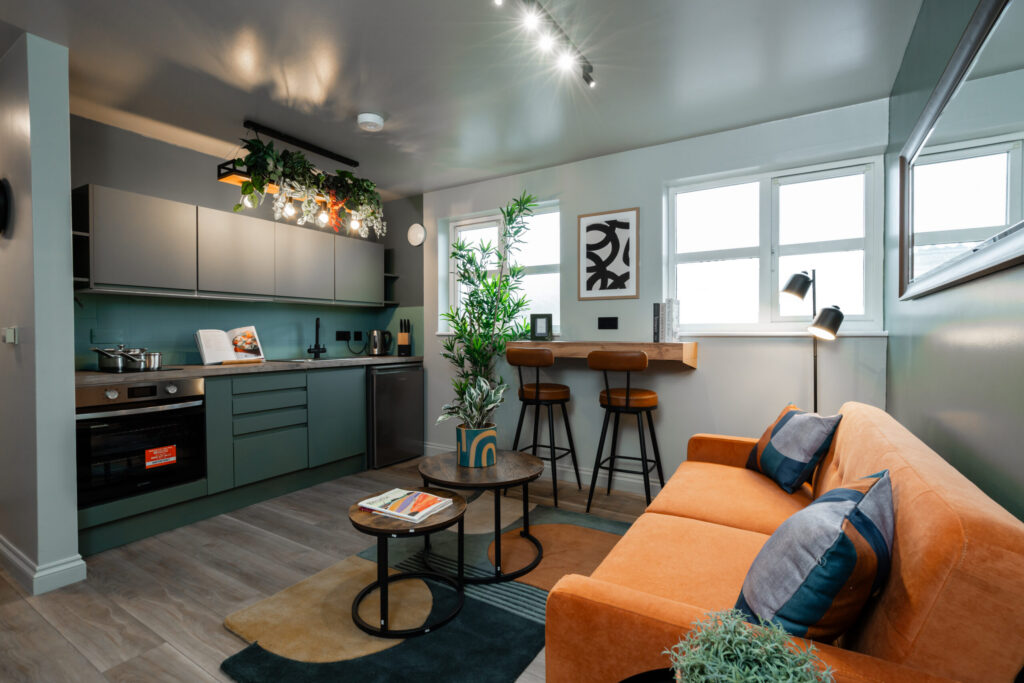
On partners, couples are allowed in a Hive Plus room, a studio or a one-bedroom flat, and the price covers two people with no extra charge for the second person. A single-occupancy Hive room can’t take a second person, so tell us if someone will join the employee, even if they will arrive later. Our post on relocating with a partner covers which home suits a couple.
Mention parking only if someone needs it. Co-living has free on-street parking in front of the houses, first come first served. Each studio or one-bedroom flat has an allocated space for £50 a month. Say whether the stay might extend, because it affects the contract type, and ask us to set out the contract type and its terms in writing before you decide. Finally, say who signs and who pays: we can invoice your company directly, or residents can pay individually. If you are unsure who should sign, say so, and we will go through it with you.
Say how the employee will work, too. If they will be at home several days a week, tell us they need a proper workspace and we can suggest a home with that in mind.
How do you describe dates if the end date is uncertain?
Enter your best estimate in the end date field, and say how firm it is in your follow-up email. “Starts 3 November, probably 3 months, may extend” is more useful than a false end date, because it tells us which contract type to talk about.
The minimum stay is 1 month and there is no maximum, so an uncertain end date is not a problem for the housing. It matters for the contract. Our periodic contracts carry 2 months’ notice to end them. A fixed term suits a medium stay such as 2 to 3 months, has no notice period, and can’t be ended early. If you cannot say which stay you expect, the periodic option leaves you room to end later with notice. Short stays carry a premium on the monthly rent, so the length of stay also affects the price. Our comparison of periodic and fixed-term corporate housing goes through the choice.
If the start date depends on something outside your control, such as a visa or a notice period at the employee’s previous job, put that in your email. A start date that is “firm once the visa is approved” reads differently from one that is already fixed.
Say how tight the timetable is. When we shortlist, your dates tell us what to look at, so a brief that says “start date is two weeks away” tells us to look at what can be arranged now, while “start date is in three months” gives more room to plan.

What should you leave out of the first brief?
Leave out anything the shortlist does not need: personal documents, salary details, the employee’s family circumstances beyond who will live in the home, and a long list of preferences. A first brief is for matching a home, not for onboarding the resident.
Every resident goes through a vetting and referencing process before moving in, so the employee will be asked for their own details later. Don’t collect passport copies or financial records from the employee just to send us a brief. Send only what the form asks for plus the extra details above. We don’t ask for lengthy procurement forms first, and a short brief fits that.
Also leave out requirements you have not checked. Don’t write assumptions such as weekly in-room cleaning or bed linen into the brief, because they can mislead everyone. Cleaning in our homes covers the communal areas, and for anything else, ask. Pets and discounts are better raised as questions than written in as assumptions.
What does a good brief look like in practice?
A good brief fits in a few lines. This one is an illustration, not a real booking.
| Field | Example |
|---|---|
| Company | Example Ltd |
| People | 3: one employee in a studio, one employee in an en-suite room, and Employee A’s partner, who arrives later |
| Dates | Start 3 November; end around early February; may extend |
| Location | Either; the studio can only be in Bicester |
| Extras (in the follow-up email) | Employee A is moving with a partner who arrives later; no parking needed |
| Payment and signing | Company invoiced; who signs to be confirmed with us |
| Contact | HR coordinator, with email and phone |
That takes two minutes to write and gives a provider enough to start suggesting homes.
The example leaves out street preferences, salary and passport details, and a long wish list. It names the number of people, says which home type each one needs, flags the partner who is arriving later and leaves the signing question open for a conversation. If your company has a purchasing process that needs a purchase order number or an internal reference, add that line too, since it saves a round of emails later.
How do you brief for a team instead of one person?
In your follow-up email, list each person on a separate line with their own home type and dates. Our homes can accommodate teams of different sizes, and we coordinate move-ins, access and ongoing resident services.
That detail matters because a team doesn’t always arrive together. One engineer may start in November and the next in January, and each might want a different home. Put the headcount first, then one line per person. Don’t assume homes can be held for a company in advance, so if your plan depends on several homes being free on the same date, say so early.
Our homes suit relocating employees and individual placements, not multi-occupancy site housing. If you are moving a large crew, tell us the headcount and we will say honestly whether we are the right fit. For the wider move, our employee relocation checklist for HR teams puts housing in the context of the other tasks.
Frequently asked questions
What information does a corporate housing enquiry need?
The corporate enquiry form asks for the company, the number of people, the start and end dates, the location (Bicester, Kidlington or either), and a contact name, email and phone number.
Do I need to know the exact end date?
No. Enter your best estimate in the end date field and say how firm it is in a follow-up email. The minimum stay is 1 month, there is no maximum, and our periodic contracts can run on with 2 months’ notice to end them.
Can I ask for a studio outside Bicester?
No. Studios and one-bedroom flats are in Bicester only. The homes in Kidlington are co-living en-suite rooms, so choose “Bicester” or “Either” if you need a different type.
Can I book several homes in one brief?
Yes. List each person and their dates in your follow-up email, and one team coordinates the bookings so you do not manage several reservations separately.
Who signs the contract and who pays?
We can invoice your company directly, or residents can pay individually. Tell us which you prefer when we reply to your enquiry, and we will go through the signing details with you.
Send your brief
When you have the headcount, dates and a town, fill in the corporate enquiry form, then email the extra lines from this post to info@b-hiveliving.com. To see the home types first, look at our homes.